Our first post-COVID international trip was to Croatia in July and August of 2021 to visit my husband Jaroslav’s family. We spent the first nine days in Jaroslav’s hometown of Makarska on the Dalmatian Coast visiting his sister Mariana and her family. The next six days were spent on the island of Vis where we all rented a charming renovated stone Dalmatian house in the town of Komiža. The final five days were spent in the Zagreb area with Jaroslav’s cousin Ratko and his family. This entry is one of two blog posts detailing the Vis leg of our trip. When I began writing about our time on Vis, I realized that there was too much to cover in one post. In this first post I provide background on the island itself. I also share our routines in Komiža, including where we stayed and our wanderings about town. In the second post, which should appear within a few weeks of this one, I’ll focus on our beach time and dining experiences.

For several years now it has become a tradition each time we travel to Croatia to head out to the island of Vis for about a week, where we stay in the town of Komiža and enjoy some relaxation and beach time. We began doing this because over the past decade the Croatian coast has become more crowded with tourists during the summer months, making beach time in Jaroslav’s hometown of Makarska less pleasant than it used to be. In fact, the country has seen such an influx of tourists that around 2010 the Croatian National Tourist Board changed its slogan from “Croatia: The Mediterranean as it Once Was” to “Croatia: Full of Life.” While Makarska is a beautiful town worth visiting, with a great café and dining scene and plenty of charming places to wander and explore, in recent years we have preferred to go to the beach elsewhere.

We love the island of Vis due to its remoteness, which it comes by in two very different ways: its physical location far out in the Adriatic Sea and recent history.
First, Vis is the furthest out inhabited island from the Croatian coast. To get there takes a more than two-and-a-half-hour ferry ride from the coastal city of Split, the capital of Croatia’s Dalmatia region. And once one arrives, only three hotels may be found on the entire island. Instead, most visitors rent homes and apartments, which are limited in number and availability and typically cost more than hotels and lodging on the Croatian coast. The time and expense it takes to get to and stay on Vis dissuades many from vacationing there.


The island of Vis is connected to the Croatian mainland by the Petar Hektorović, one of Jadrolinija’s many ferries. Jadrolinija – named for the Jadransko More (Adriatic Sea) and which translates to “Adriatic Line” in English – is a ferry line synonymous with and vital to life in coastal Croatia. Jadrolinija’s ferries not only transport residents and visitors between the mainland and the islands, but serve as crucial links for goods, services, and supplies as well. The Petar Hektorović spends its days going back and forth between Split and Vis, all year long. Here are some photos of our experience taking the Petar Hektorović. Above, clockwise from left: 1) Jaroslav and Mariana boarding through the bow of the ship in Split, with Željko driving his car onto the ferry in the background. The process for loading and unloading cars onto and off of the ferry is brilliant. In Split, cars board through the bow and then upon arrival in Vis, deboard through the stern. And for the return trip, cars board through the stern in Vis and deboard through the bow in Split. So cars drive straight through the ferry, always going forward, never needing to back up. 2) On the journey to Vis, as observed from the port side of the top deck. Another Jadrolinija ferry can be seen in the distance making an abrupt port side turn, likely bound for the islands of Brač or Hvar, which are much closer to the coast than the island of Vis. 3) The Petar Hektorović arriving stern first in the town of Vis to take us back to the mainland at the end of our trip.
Like most visitors to the island, we chose to rent a house for the duration of our stay. In fact, the house and its terrace were so idyllic that rather than pushing ourselves to be active every day, we spent some of our time simply relaxing and hanging out there. Below are two photos of us enjoying the alfresco dining table on the terrace of the house we rented in Komiža. The vines draped above and around it helped keep out the bright and intense Dalmatian sun. In the first photo we’re enjoying a lunch of roasted chicken, potatoes, carrots, and other vegetables. Around the table are Jaroslav, Mariana, Mariana’s husband Željko (standing), who prepared most of the food, and our niece. In the second photo Jaroslav and I are getting ready to enjoy a bottle of Croatian wine. I’m taking the photo, but am represented by one of the two wine glasses!


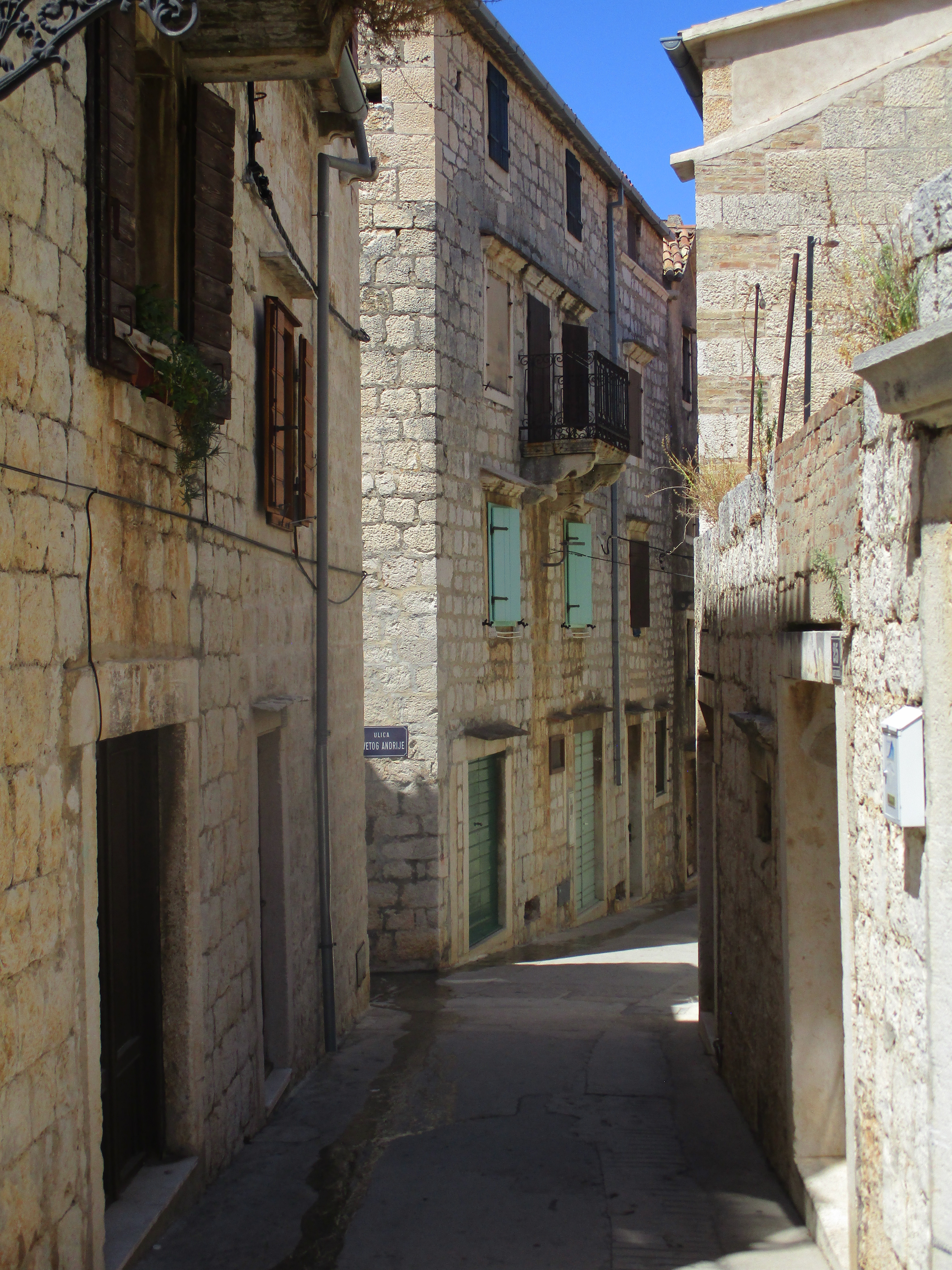
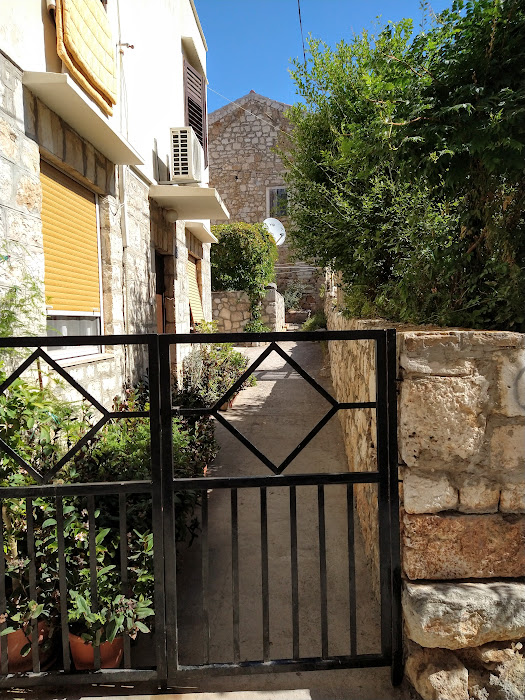
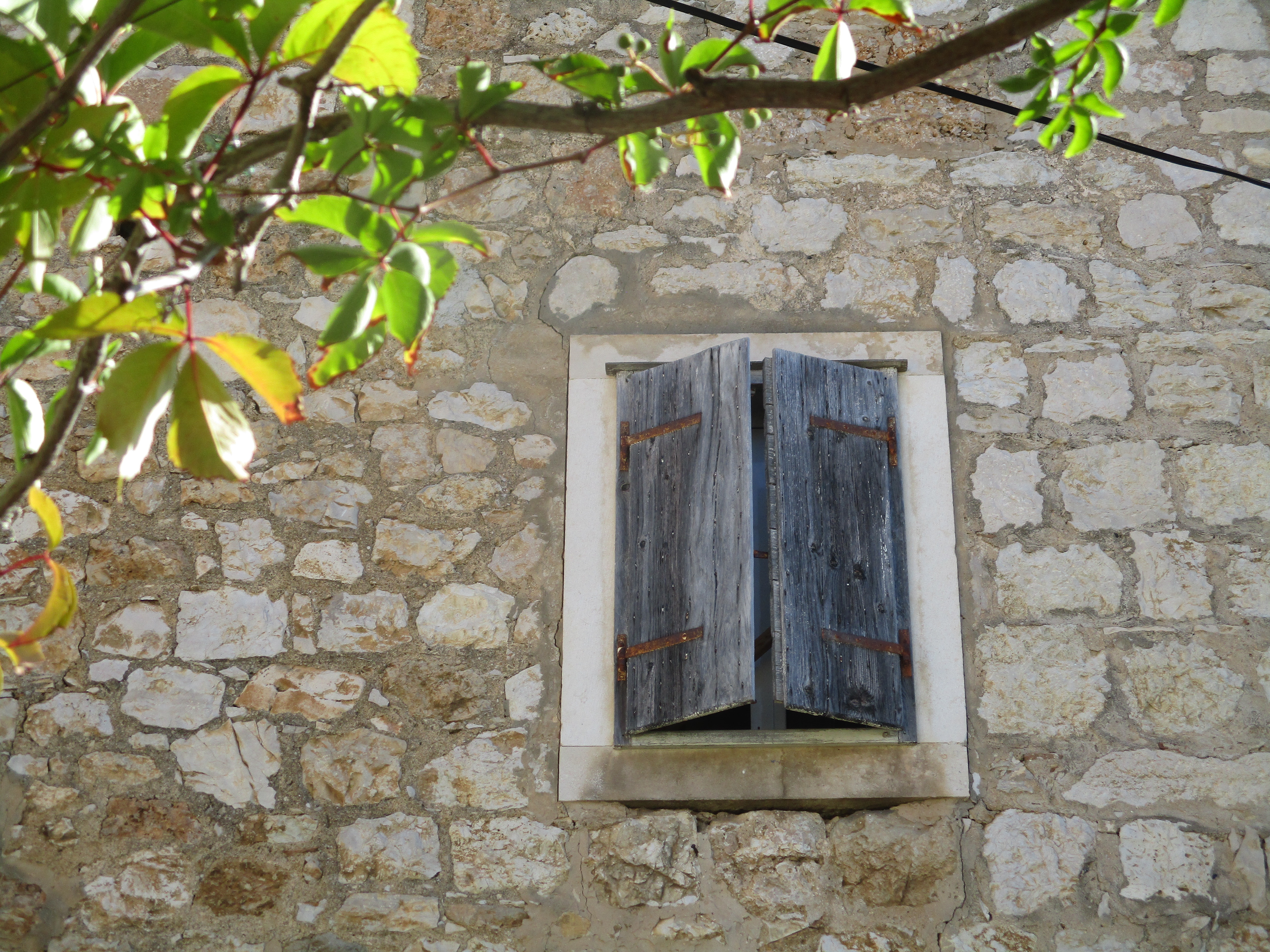
Below are some photos of the house and its grounds. Top row, from left: 1) Ribarska Ulica, or “Fisherman’s Street” in Croatian, one of the quaint alleyways Komiža is known for and where the house we rented was located. 2) Entrance to the grounds from Ribarska Ulica. Two houses were accessed by this gate. Our neighbors were a long-time Komiža family who live there year round. In the middle of the photo you can see the vines covering the dining table. And bottom row, clockwise from left: 1) Our niece and nephew riding around on their cute animal suitcases with wheels, and Jaroslav; our nephew can be seen greeting the neighbors who had their door open. 2)The kitchen of the house. Note the exterior stone wall made of the karst limestone typical of Dalmatia. 3) Rustic window with shutters overlooking the terrace.


Also due to its location out in the middle of the Adriatic, Vis is a popular place for nautical tourists to anchor their yachts and sailboats, often for more than just an overnight stay. During the day it is not uncommon to find boats anchored off the island’s beaches, some of which are inaccessible by land. Due to its nature as a type of niche tourism, nautical tourism brings far fewer numbers of guests to the island than mass tourism brings to the coast. And because nautical guests stay on their boats overnight, they do not encourage the development of more tourism infrastructure.


The above three photos illustrate nautical tourism on the island of Vis. Clockwise from left: 1) Stončica Beach, a popular destination for sailboats to drop anchor for the day. Several boats can be seen in the upper left corner of the photo, while a few of their occupants swim in the sea in the middle of the photo. I can be seen in the foreground in the dark green bikini, while our niece snorkels nearby. 2) Sailboats anchored in Komiža’s harbor at sunset. 3) Sailboats anchored in the harbor of the town of Vis at dusk. If you click on the photo, you can see that most of the boats have a little light coming on at the top of their masts. This is required of any sailboat not anchored at a dock so their location is visible at night. When it gets completely dark it’s a kind of romantic sight, all the little lights bobbing on the sea against the backdrop of a dark and starry sky.
As mentioned above, recent history has had an impact on the island’s remoteness, in particular World War II and the Socialist Yugoslav era of the twentieth century. Marshal Josip Broz, known most commonly by his nom de guerre “Tito,” spent World War II hiding out in a cave on Vis, from where he strategized and led one of the most successful resistances on the European continent against the Nazis. The Nazis had occupied most of the country of Yugoslavia.* When World War II ended, Tito was so revered and celebrated for his military achievements that he easily became dictator of Yugoslavia. At that time, the island of Vis became a Yugoslav naval base and radar station, with only the military, political elites, and island residents allowed access to it until 1982. While Yugoslav citizens were permitted access to the island beginning in 1982, foreigners were not allowed until Croatia seceded from Yugoslavia in 1991. However, due to the unstable political situation in the 1980s and the even more volatile one in the 1990s, Croatians and foreigners alike did not begin visiting the island in significant number until the first decade of the twenty-first century. The mental image of the island of Vis as a mysterious military outpost also did not help attract visitors. By contrast, tourists had been descending upon the Croatian coast since the 1950s.
*The seven countries that once made up Yugoslavia – a country that no longer exists – are: Croatia, Slovenia, Bosnia & Herzegovina, Kosovo, North Macedonia, Montenegro, and Serbia.
The result of the island’s military and political isolation in the twentieth century was a postponement in the arrival of tourists and the development of tourist infrastructure until the earlier part of the twenty-first century, albeit in a limited capacity even then. In fact, two of the only three hotels that exist on the island today are not new, but were built in the 1950s and 1960s to house the families of the military stationed there and the political elites who were occasionally allowed to visit.
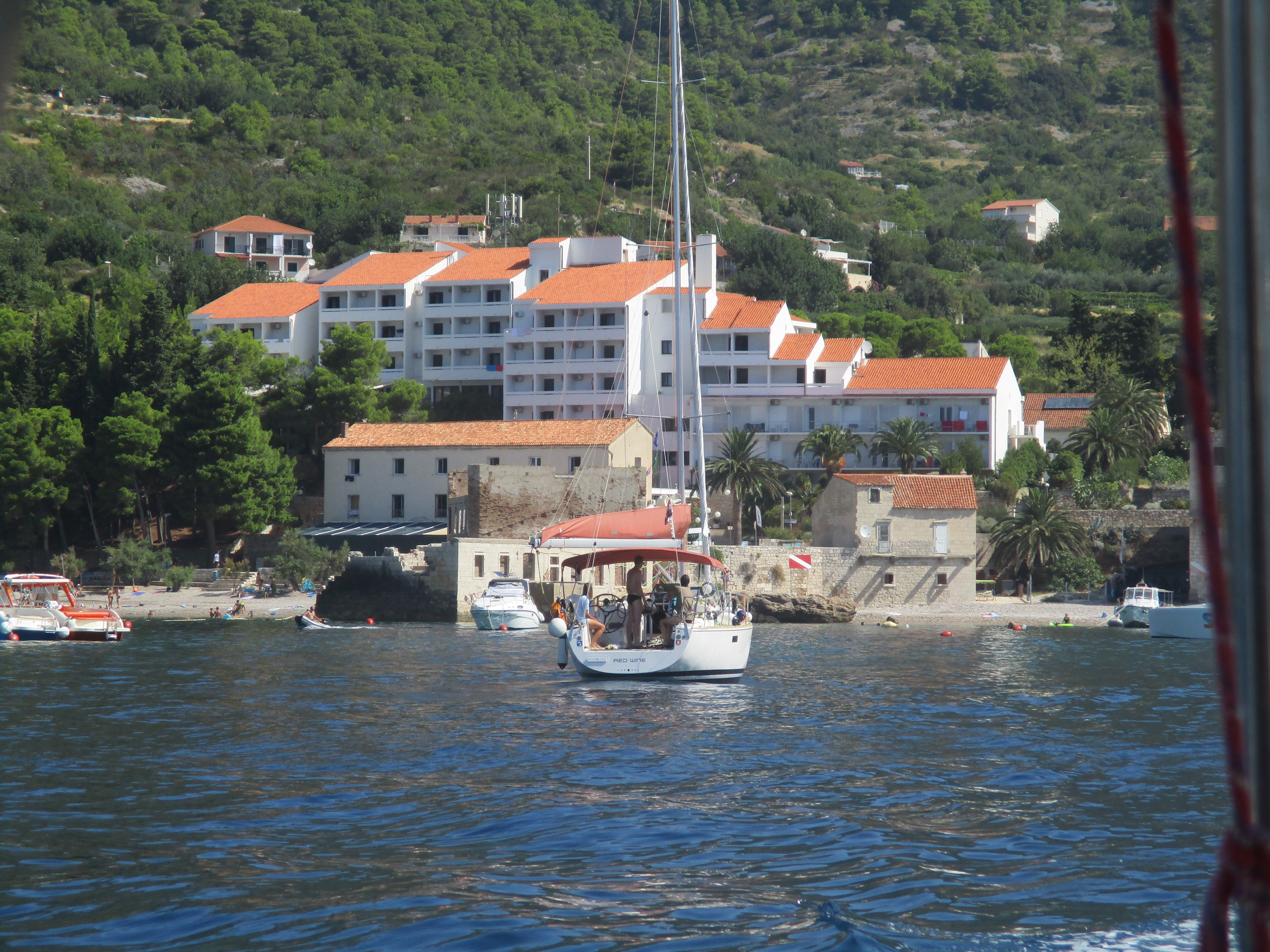
Below are some photos of the Hotel Biševo in Komiža, one of the two hotels built during the Socialist era of the mid-twentieth century. The hotel is nestled into the mountain at the end of Ribarska Ulica. While the rooms are very basic, the ones facing the sea have stunning views. And it is fascinating to take a walk around inside, even if you are not staying there. It’s like stepping into a Socialist-era time capsule as minimal updates have occurred over the years. Clockwise, from left: 1) the multi-level Hotel Biševo as seen from Komiža’s harbor. 2) Common area boasting 1960s décor, unchanged since the hotel was built. 3) Retro phone booths in the hotel lobby.

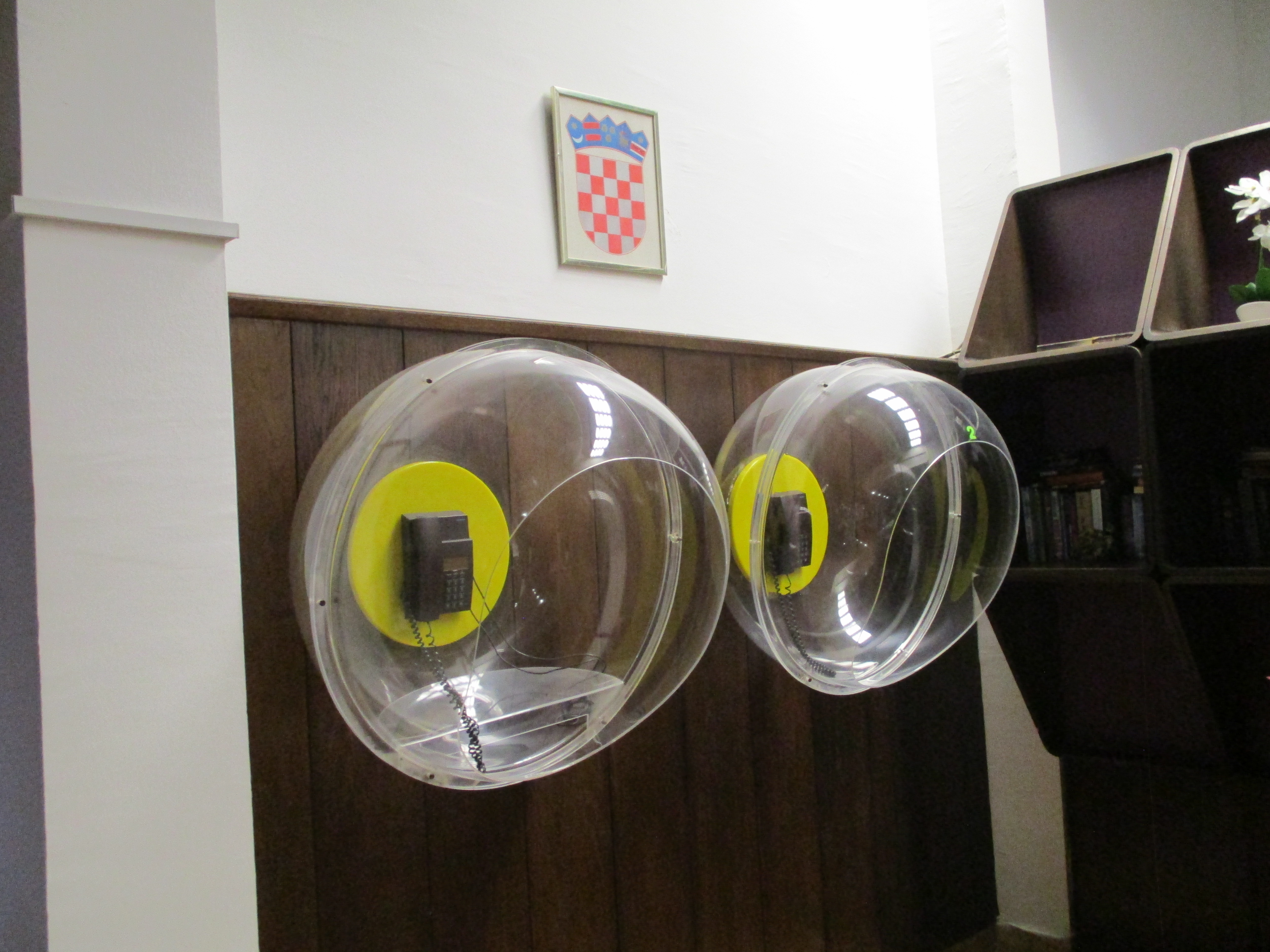
So rather than having a mass appeal, the island of Vis has a more untouched and undiscovered air about it, making it perhaps one of a handful of places left in Croatia that truly embodies the old tourism slogan “Croatia: The Mediterranean as it Once Was.”
Now I’ll switch focus to perhaps my most favorite part of this post, our Komiža routines and wanderings about town. When we visit the island of Vis, we love to stay in Komiža. Komiža is the smaller of the two towns on Vis, with the larger of the two being the island’s namesake, the town of Vis. Surrounded by vineyards and groves of olive trees, for most of the year Komiža is a sleepy fishing village. It wakes up in the summertime, when the majority of guests visit. I would say that Komiža has a great old town, but the town itself IS the old town! This is what makes Komiža so special and unique. The picturesque town is composed of quaint alleys and pedestrian-only streets, built centuries before the existence of the automobile. And the town is so compact and walkable, a car isn’t necessary, anyway.


The above three photos are scenes from Komiža’s alleys. From left: 1) The owner of the house in this photo has taken liberty (and beautifully so) with the color of their shutters, which departs from the dark green or brown typically found in Dalmatia. 2) An amphora containing lavender and another native plant welcoming guests at the entrance to a tiny shop. 3) Cats relaxing and cooling off in the shade between two buildings. The beautiful hydrangeas and other vibrant green plants provide a refreshing contrast against the stark stone of the buildings.
If you read my post about the Makarska part of our trip, you know that we take our morning coffee ritual very seriously when we’re in Croatia. That ritual follows us when we go to Vis! Here are some photos of morning coffee in Komiža. This is how we would start each day, before jaunting off to one of the island’s many beaches.


Above three photos, clockwise from top. 1) A busy morning at Caffe Bar Speed, our favorite place for coffee. Mariana can be seen in the middle of the photo in the yellow tank top with Željko and me sitting across from her. 2) The two tall, dark and handsome siblings, Jaroslav and Mariana. 3) And what better to follow morning coffee than a refreshing Aperol Spritz? Mariana and I splurged one day and ordered Aperol Spritzes at 10:30 AM. For some reason, whenever I’m in Croatia in the summertime I enjoy drinking Aperol Spritzes. I don’t ever have them when I’m at home in the US. It is a drink my mind associates with Croatia. And bonus, the spritzes were served with compostable straws, keeping the uniquely beautiful natural environment of the island in mind.
Below are three photos of the riva that I took from the café while we were having our morning coffee. “Riva” is the Croatian word for a pedestrian-only walkway along a waterfront. All of Komiža’s alleys and streets lead to the riva. The full expanse of the riva can be seen in the second photo posted above at the very beginning of this blog post.
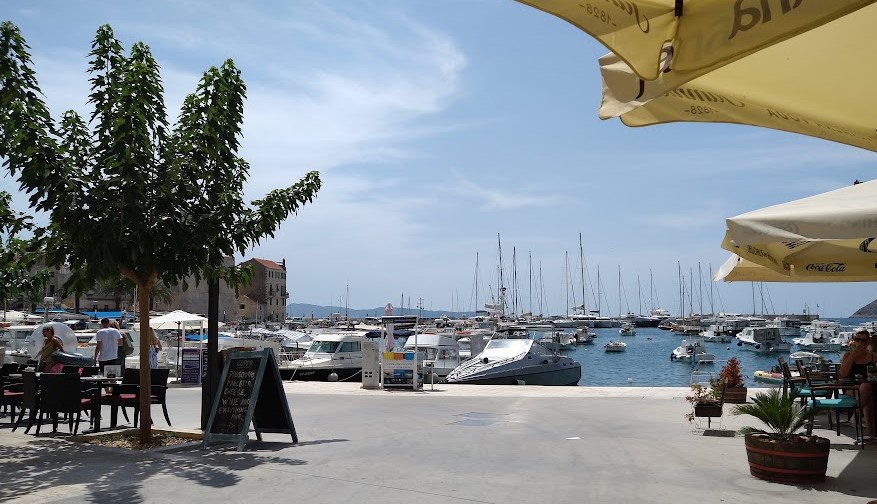


Above three photos, clockwise from the top: 1) Riva view from Caffe Bar Speed. 2) A Dalmatian dog being walked (and yes, the Dalmatian breed originated in the Dalmatia region of Croatia!). 3) Our three-and-a-half-year-old nephew doing some exploration of the riva on his own. I love the photo of our nephew because it demonstrates the independence that Croatian parents allow their children. I was initially amazed by this practice but now understand and appreciate it. For I come from the USA where parents tend to hover around their kids, keeping track of every single movement, trying to prevent every possible imagined disaster from happening. What I have learned and observed in Croatia is that by granting children more independence, children learn how to handle, manage, and develop that independence. Kids become more confident, less fearful, and demonstrate a maturity and intellect beyond their years. Now, in the defense of American parents, I will admit that Croatia is much safer than the US.
In this last part of the post I’ll share our routine from perhaps the most beautiful time of day in Komiža, the time when early evening melds into sunset. After returning from our daytime outings we would stroll into town for some dinner, taking our time along the way. Below are three photos from one of our early evening strolls. Clockwise from left: 1) View of the right side of the harbor from the riva, looking towards the buildings and homes that line one side of Ribarska Ulica. The ideal lighting of early evening made the images in this photo brilliant and crisp. 2) The busy pedestrian intersection where Ribarska Ulica meets the riva. Our morning coffee place can be seen on the left. 3) A tiny shell sculpture adorning the entrance to a home on the riva, 31 Riva to be exact!


Some days we returned to Komiža later than others and didn’t begin our stroll to dinner until the sunset was well underway. Below are two photos taken on one of those evenings. From left: 1) A romantic balcony off Ribarska Ulica. The island of Biševo can be seen in the distance. 2) View of the far end of the riva, with the Venetian fortress on the right.


And eventually we did make it to dinner! Below is a photo of Mariana, me, and Jaroslav at Pizza&bar Hum. More about that delicious restaurant in my next blog post!

Please subscribe to my blog by entering your email address below. It is an honor to share my experiences with you!
 Finding Balance on the Edge: Figure Skating & Travel Journeys by Carolyn Tir