
This past summer, I was fortunate to attend two-time US Ladies National Figure Skating Champion and Olympic Bronze Medalist Gracie Gold’s Road to Gold Destination Vail training camp. Presented by the Vail Skating Festival in conjunction with Shipstad Entertainment, Road to Gold Destination Vail is perhaps the most storied of all the Road to Gold training camps, which Gracie Gold holds in various locales around the USA. Attracting attendees from around the world, Destination Vail is held each July in Vail, Colorado, the iconic Rocky Mountain ski town founded in the 1960s and once-favored retreat of 38th US President Gerald Ford and First Lady Betty Ford. Perhaps best of all, in addition to a camp for children, Destination Vail includes a two-day camp exclusively for adult figure skaters. This post is the first in a two-part review focused on the part of the camp for adults.
All photos in this post were taken by Sam Atagana Photography. I purchased the full collection of camp photos and am posting a selection with the permission of Sam Atagana Photography. The post’s photo captions were written by me.
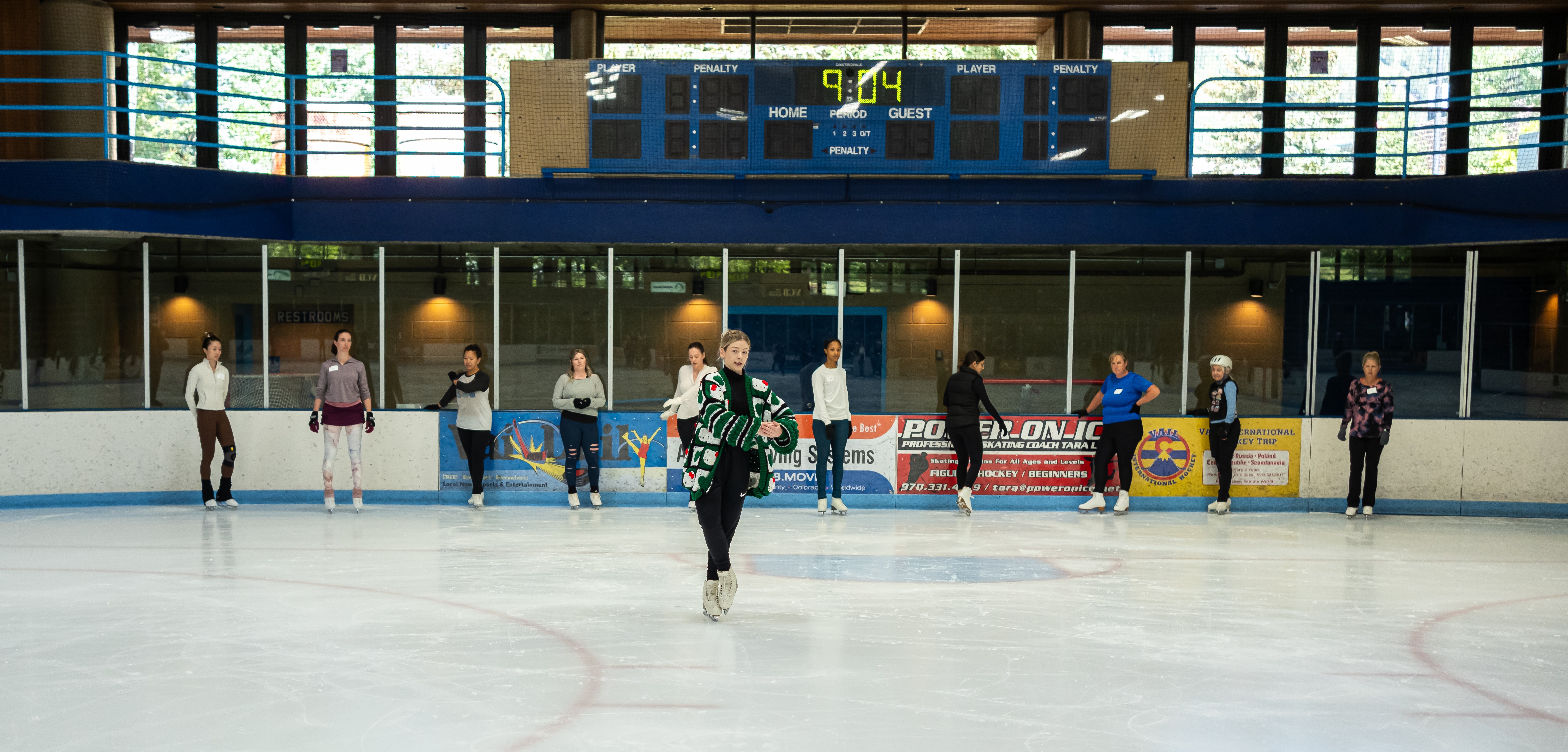
Photo featured above: Gracie Gold surveys her camp in Vail’s Dobson Ice Arena.
Disclaimer: This review is based on my own perceptions and experiences as an attendee of Road to Gold Destination Vail. I am not affiliated with Road to Gold Destination Vail.
In Part 1 of my review I provide an overview of the camp, including technical details on location, cost, lodging, and attendees; coaching staff; camp format, including types and levels of classes offered; and, perhaps best of all, the value added… in other words, why adult figure skaters should make Destination Vail the pinnacle of their summer training schedule! And just for kicks and giggles, I’ll share some photos from around the camp. This review is timely as the dates for Road to Gold Destination Vail 2024 were recently announced. Registration for the 2024 camp begins in March. To learn about the 2024 camp, visit the following link: https://www.road2goldskating.com/group/2024-adult-destination-vail/about. I hope my review will encourage adult figure skaters to attend the camp this July! In Part 2 I share highlights of what I learned at the camp, including what I learned from the camp’s star, Gracie Gold. To read Part 2 of my review, visit the following link: https://findingbalanceontheedge.blog/2024/03/18/review-of-road-to-gold-destination-vail-2023-adult-figure-skating-camp-part-2-what-i-learned/
Technical Details
Location: Dobson Ice Arena, in the Lionshead Village part of Vail, which is accessed from Exit 176 on US Interstate 70 (I-70). Free daytime parking with no time limit is available in the Lionshead Parking Structure, a convenient three-minute walk from the rink. The two nearest airports are Denver International Airport (about a two-hour drive, depending on traffic, which can be heavy and slow at times) and Eagle Regional Airport (about a forty-minute drive). While major air carriers service both airports, there is more selection at the Denver airport.
Cost: Classes are purchased à la carte and range in price from $27 to $37, with the off-ice classes being $27. There is a break in pricing if a certain number of classes are purchased (if I remember correctly, if 9 or more classes are purchased). Classes take place over two days, but there is no requirement that an attendee participate both days. It is possible to attend just one of the days.
Lodging: Unfortunately, there were no discounts on lodging in Vail for camp attendees. Several of my friends went in on a condo rental and saved money that way. I highly recommend staying in Vail if at all possible. It is a small and manageable pedestrian-friendly town, in most cases allowing attendees to walk to the rink from their accommodation. I, on the other hand, thought I would save money by staying at my pied-à-terre in nearby Summit County. I had to undertake a 35-minute drive both ways each day over Vail Pass, a challenging part of I-70 known for twists and turns amid significant elevation gains and drops. By the time I arrived at the camp, I was anxious and stressed from the white-knuckle drive. Not the way to commence an action-packed skating day! If you are willing to drive about 10-15 minutes each way, the town of Avon – the next town west of Vail on I-70 – is slightly cheaper. The drive is on a relatively simpler and flatter stretch of the interstate, too, so no arriving at camp all stressed out!
Attendees: 43 adult figure skaters from around the USA and Canada were in attendance (the 2022 camp included an attendee from as far away as New Zealand!), plus four coaches and Road to Gold staff. The skaters were of all levels, from beginner to advanced. I learned that some of the skaters traveled to Vail with their families in tow, having decided to make a vacation out of the experience. Vail is full of activities in the summertime, including hiking, mountain biking, chair lift rides, and of course excellent dining and shopping. And the mountains are so beautiful and green at that time of year!
Coaching Staff
Road to Gold Destination Vail 2023 boasted a stellar coaching staff made up of figure skating champions, current and former national and international competitors, and elite coaches with extensive experience working with elite skaters from around the globe.
The camp’s world-renowned namesake Gracie Gold is a two-time US Ladies National Figure Skating Champion and Olympic Bronze Medalist. While Gold won her first US national championship in 2014, she competed at US Nationals as recently as 2023. As an adult skater, I find it inspiring that Gold has not allowed her age – nor the at times arduous challenges she has faced along the way – deter her from continuing to compete at the highest level.
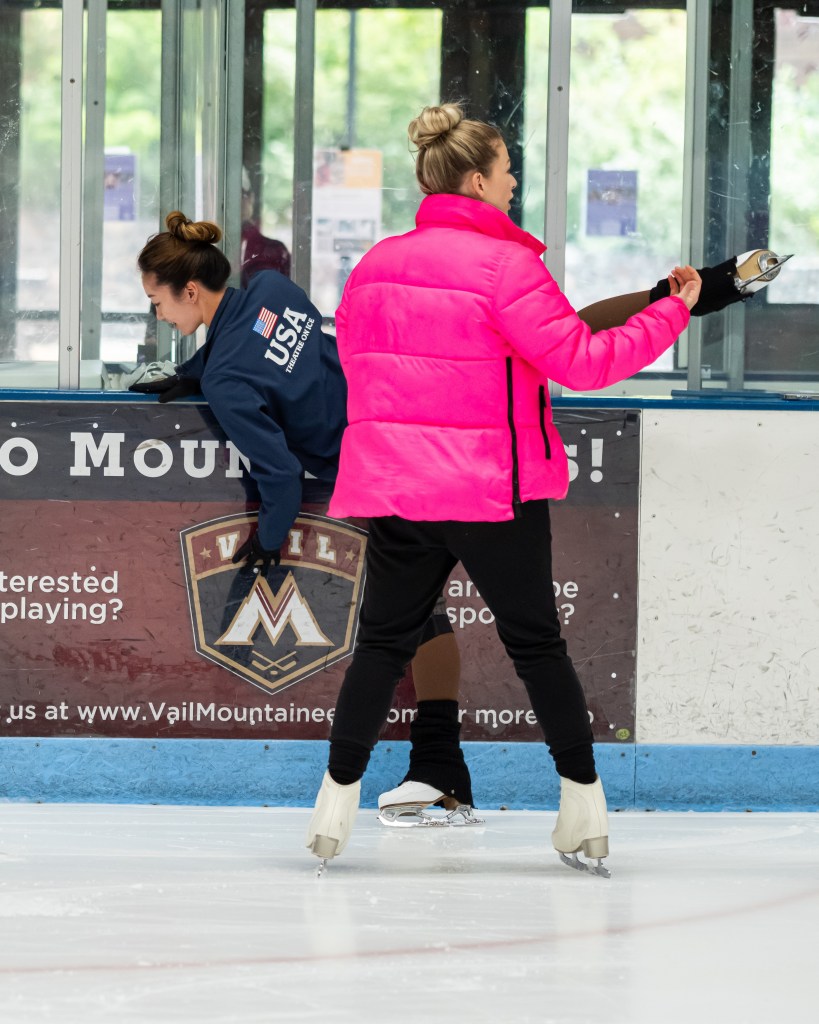
Geoffry Varner is a former US national and international competitor and medalist. Currently an elite Senior Coach at the San Diego Ice Arena, his accolades include three-time competitor at the ISU Junior Grand Prix, where he earned the title of ISU Junior Grand Prix Final Bronze Medalist.


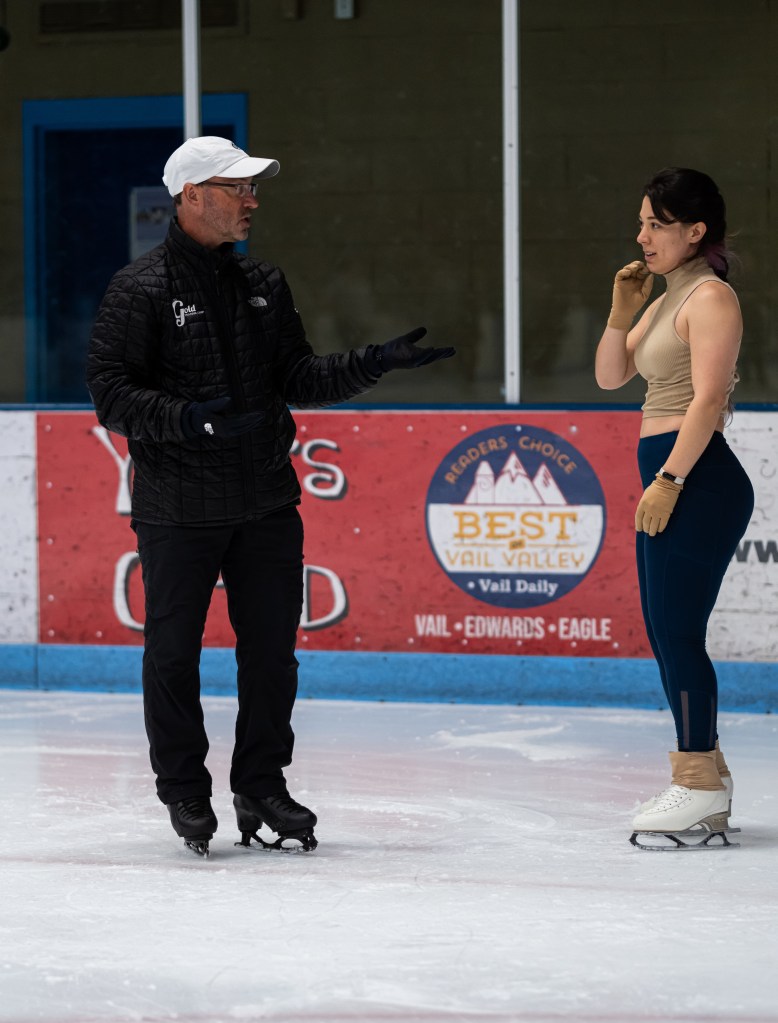
Eddie Shipstad is a former five-time US national competitor and US Nationals Novice Silver Medalist. Currently an elite coach at the world-renowned Broadmoor Skating Club in Colorado Springs, Colorado, he is a PSA Master Rated Jump Specialist who has shared his insights on jump technique with elite figure skaters the world over, including at the World Figure Skating Championships. And in a fascinating biographical twist, he is the owner of Shipstad Entertainment, carrying on a storied family tradition in ice show production.
This review would not be complete without a shoutout to Amy Fankhauser, the Founder, Owner, and National Coordinator of Road to Gold Training Camps. Amy kept camp attendees apprised of the latest details in the months, weeks, and days leading up to the camp, and was an invaluable and responsive resource for a variety of questions. And when the camp finally arrived, she ensured it proceeded as smooth as ice! (pardon my trite skating pun; I cannot help myself).
Camp Format
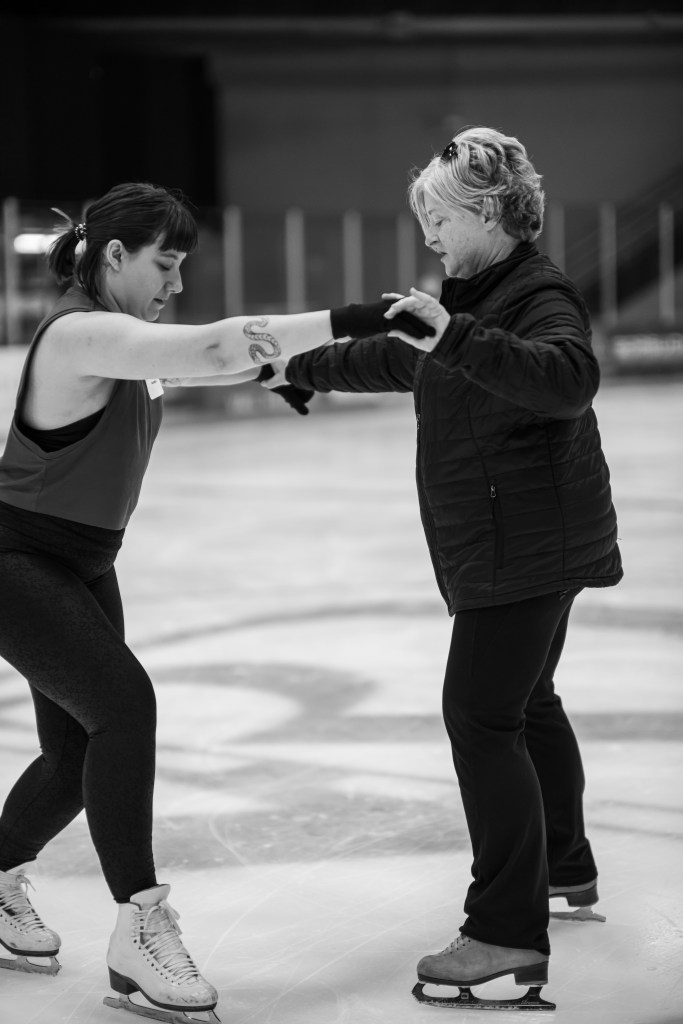
The camp took place over a long weekend, beginning on a Friday night with a meet and greet event, followed by two days of skating classes on Saturday and Sunday. The meet and greet was held on the patio of the Dobson Ice Arena. It consisted of a panel made up of the coaching staff, who fielded questions from camp attendees and shared fun facts about themselves. After the panel, the coaches were gracious and spoke with each of the attendees individually, as well as posed for photos. See my blog’s home page for a photo of me with the coaches.
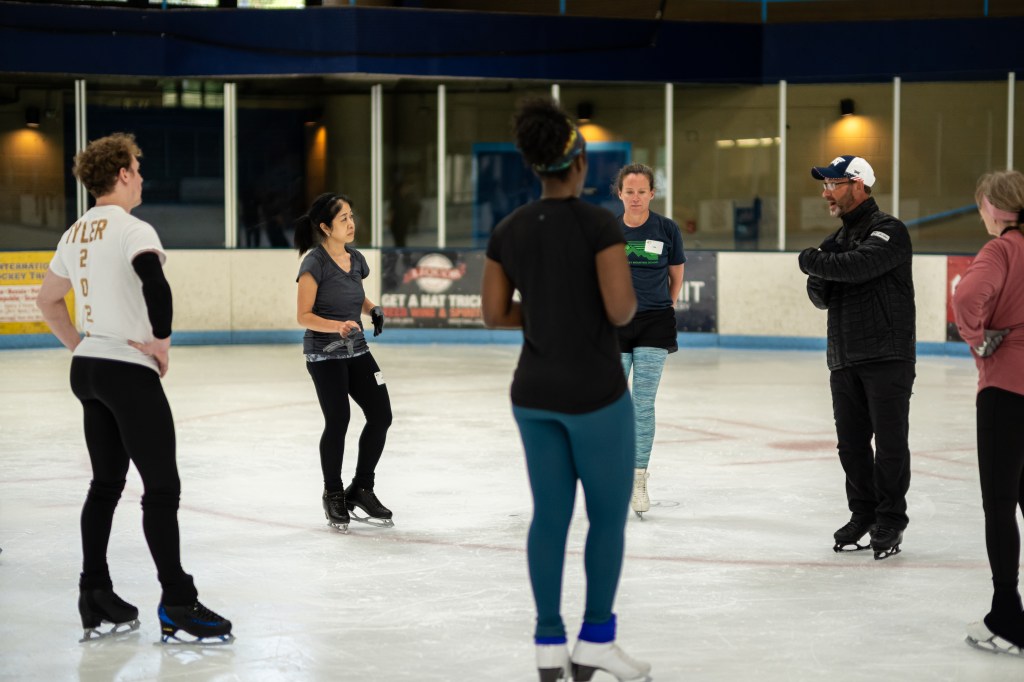
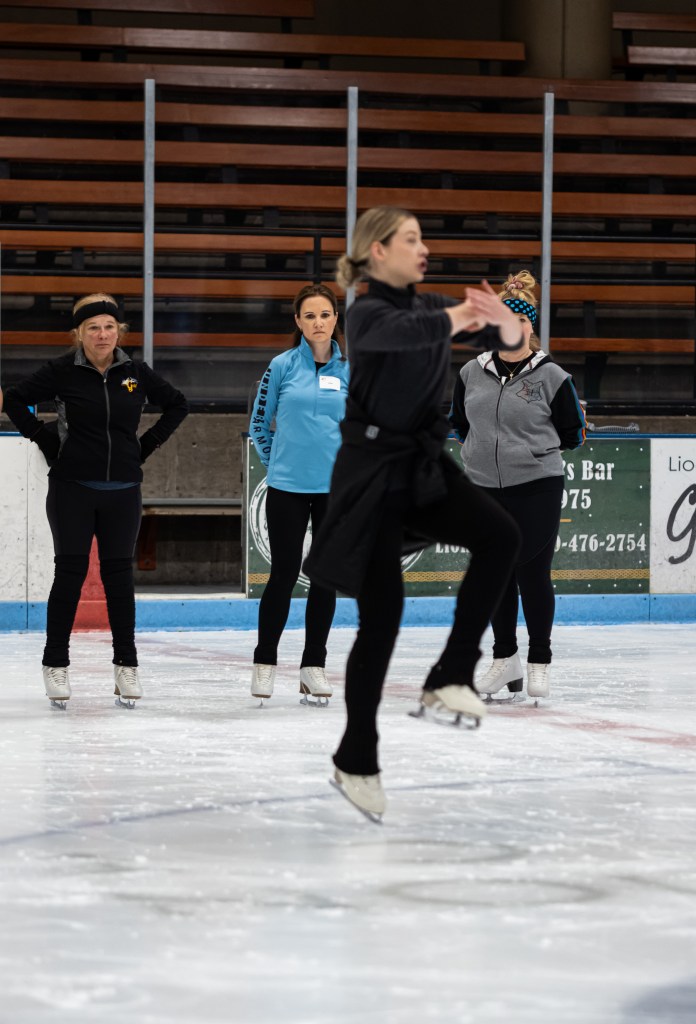
Classes were held on Saturday and Sunday, beginning at 8:45 AM and ending by 3:15 PM. On-ice and off-ice classes were for 40 and 30 minutes, respectively. Two on-ice classes took place at the same time, with each class using half of the rink. There were a total of 31 on-ice classes covering a variety of topics, including single and double jumps, single, combination, and flying spins, steps and turns, spirals, choreography, and visualization. The 11 off-ice classes included such topics as stretching, jump theory and technique, and developing upper body lines, among others. Some of the instructors of the off-ice classes were professionals with expertise in areas ancillary to figure skating, such as movement and injury prevention. In addition to classes, freestyle sessions were available before and after the camp on both days, allowing attendees to take private lessons from the camp coaches for an additional cost.
With respect to level, classes were designated as “A,” “B,” or “C,” with “A” the easiest and “C” the hardest. Class descriptions included helpful pre-requisites for determining which levels were appropriate for the skater. For example, the pre-requisite for the “B” level Single Loop and Loop Combinations class was “participants should be able to perform a back spin and back outside 3-turns and should be attempting or ready to attempt a single loop jump.” And for the “C” level Flying Spins class, the pre-requisite was “must be able to complete a minimum of three revolutions in forward camel and sit spins and one to two revolutions in back camel and sit spins.” It was not unusual for skaters to take classes at all levels, as skaters can be more advanced in one area and less advanced in another. I am probably a “B” level skater but found I acquired valuable insight in all class levels I took, including at the “A” level. All of the classes, regardless of level, were presented in an innovative, challenging, yet supportive manner, which I will discuss in greater detail in the Value Added section below.
Value Added
In discussions my friends and I had about Destination Vail, we agreed that the camp was different from what we anticipated, but in a positive, very effective way. The innovative coaching style encouraged us to approach our skating from a fresh perspective. Rather than rehash skills we were already learning and working on at home, the coaches presented us with new content and challenges. For example, when some of us signed up for James Hernandez’s Fundamental Turns and Steps class, we thought he would provide instruction on how to perfect specific turns and steps. However, instead of focusing on the “how to” of turns and steps, he had us put turns and steps together in a choreographic sequence, which we then skated to music at the end of the class. The sequence consisted of crossovers, 3-turns, C turns, and pivots, among other steps. It was challenging to learn and memorize the sequence in a short amount of time, but very fun. So rather than wasting time going over what we were already working on elsewhere, he took what we are working on in a new direction, a few steps further (no pun intended!).
This is why Destination Vail is so effective. The coaches devise innovative ways to push skaters beyond their comfort zone to try something new. And when you add the supportive and non-judgmental camp aura to the mix, the result is that skaters are less afraid to attempt – and then achieve – new things. For example, in Eddie Shipstad’s Single Loop and Single Loop Combos class I was able, for the first time in two decades, to attempt and land a loop jump as the second jump in a combination. Up until then, I had been too afraid to attempt it. But at Destination Vail, with new insight and tips from Shipstad, in a supportive environment surrounded by my skating peers, I was able to do it. I then left the camp with a newfound confidence and positive mindset from which to approach my skating.
Perhaps best of all, Destination Vail was an invaluable opportunity to connect and network with other adult figure skaters. There was a palpable feeling of belonging permeating throughout the camp, which helped us experience first hand how we are all part of a greater community of adult figure skaters. This is crucial in a sport where at times adult skaters can feel like they must strive to justify their presence on the ice amid much younger generations of skaters. For while the number of adults who figure skate has seen a steady rise over the past several decades, adults remain in the minority at their home skating clubs. Destination Vail provides legitimacy to adult figure skating and inspires skaters to continue on their figure skating journey, no matter what challenges they may face.
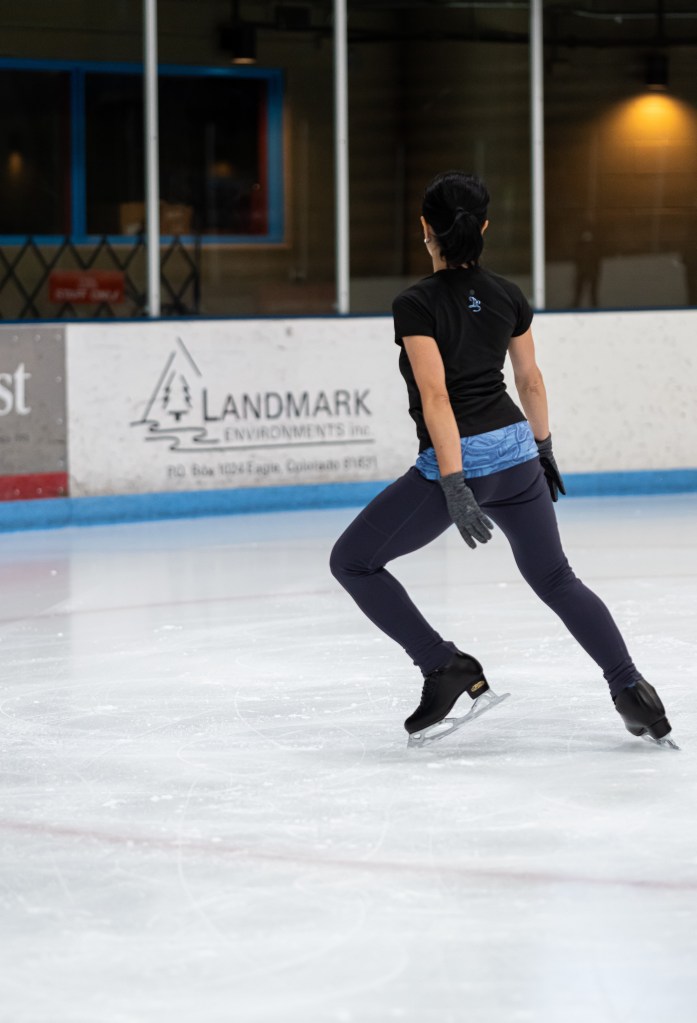
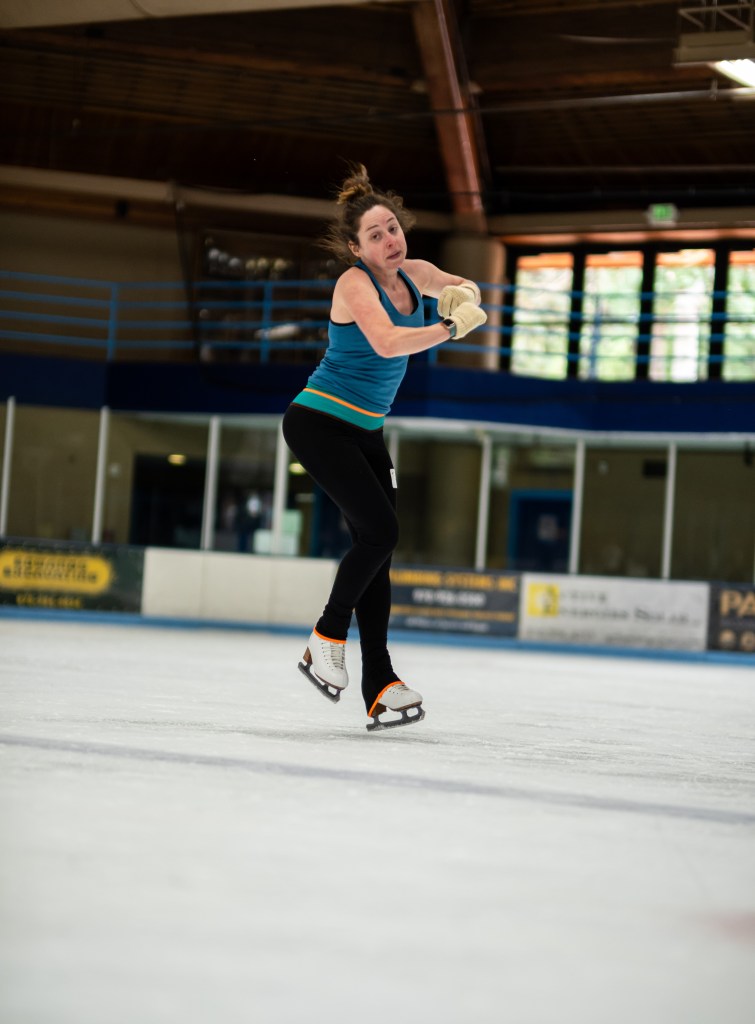
I’ll close this post by sharing some additional photos from around Destination Vail. I was truly amazed by the breadth and depth of talent of the camp attendees, some for whom double jumps and creative combination spins were consistent and effortless. And while there were certainly some advanced skaters at the camp, beginning and intermediate skaters should not be intimidated nor hesitate to attend. Destination Vail provides a range of instruction in an unbiased, supportive environment for adult figure skaters of all levels.




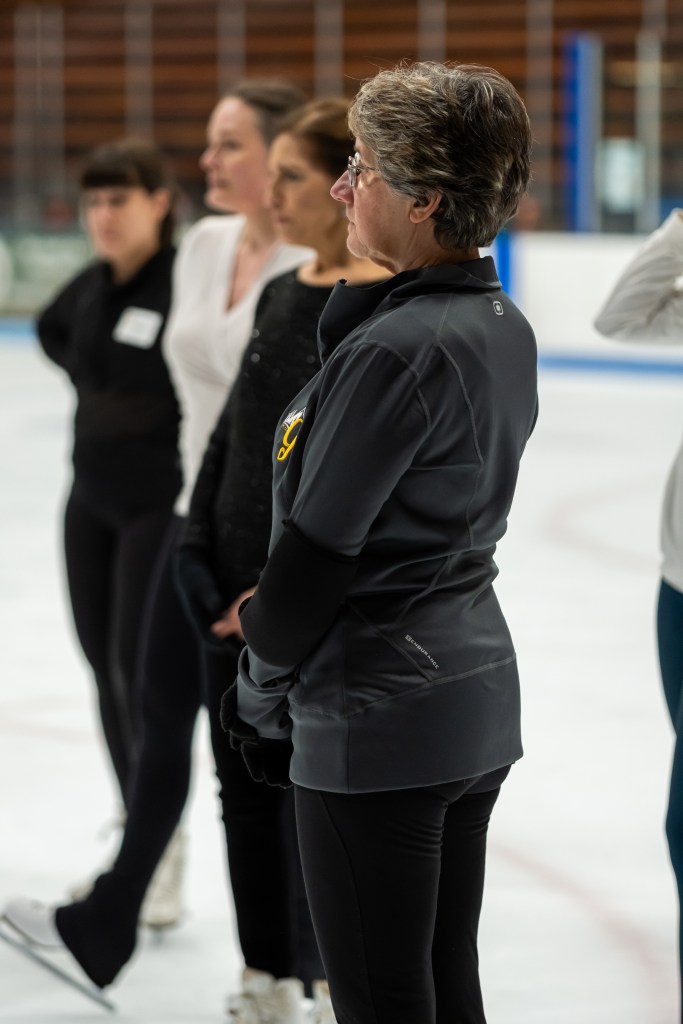


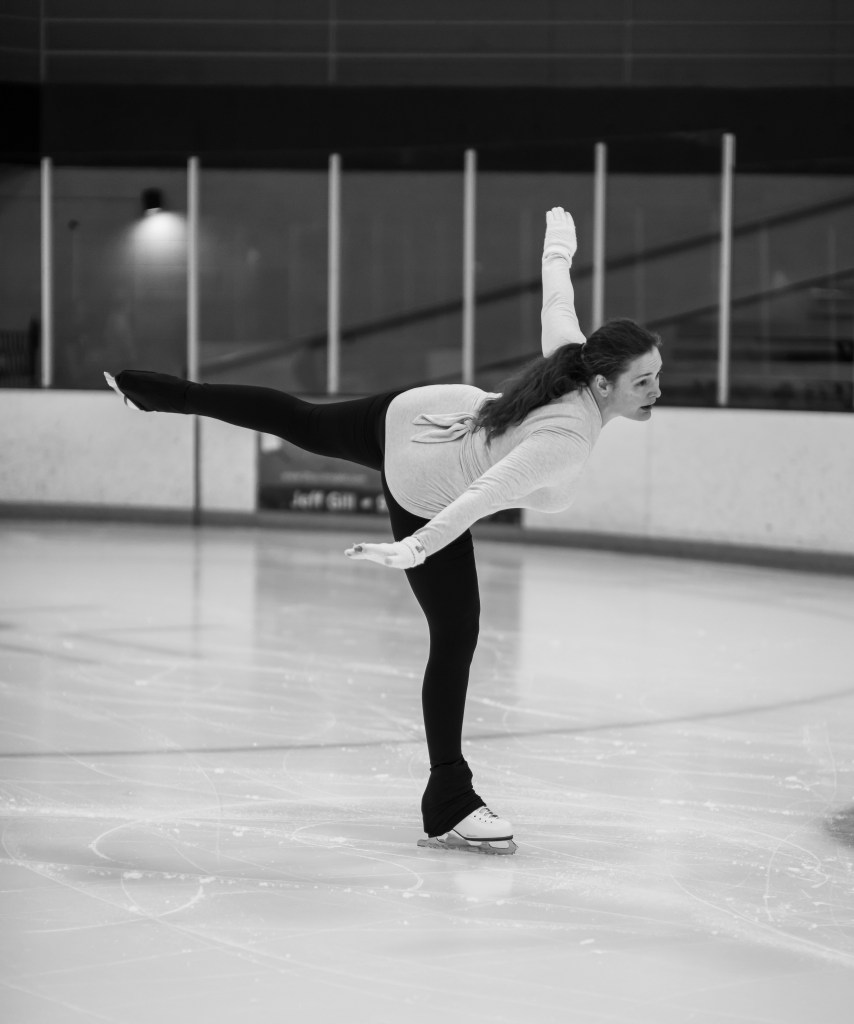


Hope to see you at Road to Gold Destination Vail 2024!
If you’ve enjoyed what you’ve read, subscribe to my blog by entering your email address below. It is an honor to share my experiences with you!
 Finding Balance on the Edge: Figure Skating & Travel Journeys by Carolyn Tir
Sounds like a fun experience! The cost of the classes seems quite reasonable, especially considering the coaching staff and their approach to try new things. I’m always amazed at how effortless figure skates make everything look, but the reality is that it requires a lot of training!!
LikeLiked by 2 people
Yes! I always say it takes natural talent plus a ton of hard work! Lots of little details must come together, and all at once, or else you fall on your rear… and not just on the jumps! Some of my worst injuries have been from falls when practicing turn sequences.
LikeLiked by 1 person